
Food writers often struggle to find a reliable path through the culinary scene in Ho Chi Minh City (commonly still known as Saigon), but the new four-part video series The Tasting Menu: Saigon aims to bridge the gap between street stalls and fine dining. The project, produced by SAVEUR, moves seamlessly between humble eateries and buzzy restaurants to explore the city’s dining environment through the eyes of local experts. Rather than just listing popular spots, the series looks at the history and evolution of specific dishes, from the rise of cơm tấm to the booming coffee culture.
Every city has a signature dish, but few capture the spirit of Saigon quite like cơm tấm. The dish began as an economical meal built around discarded grains of rice left over from milling. Over time, it evolved into one of the city’s defining culinary traditions, a clear sign of Vietnamese ingenuity out of necessity. It is now served everywhere from humble street stalls and family-run institutions to ambitious new-school restaurants.
The Evolution of a National Dish
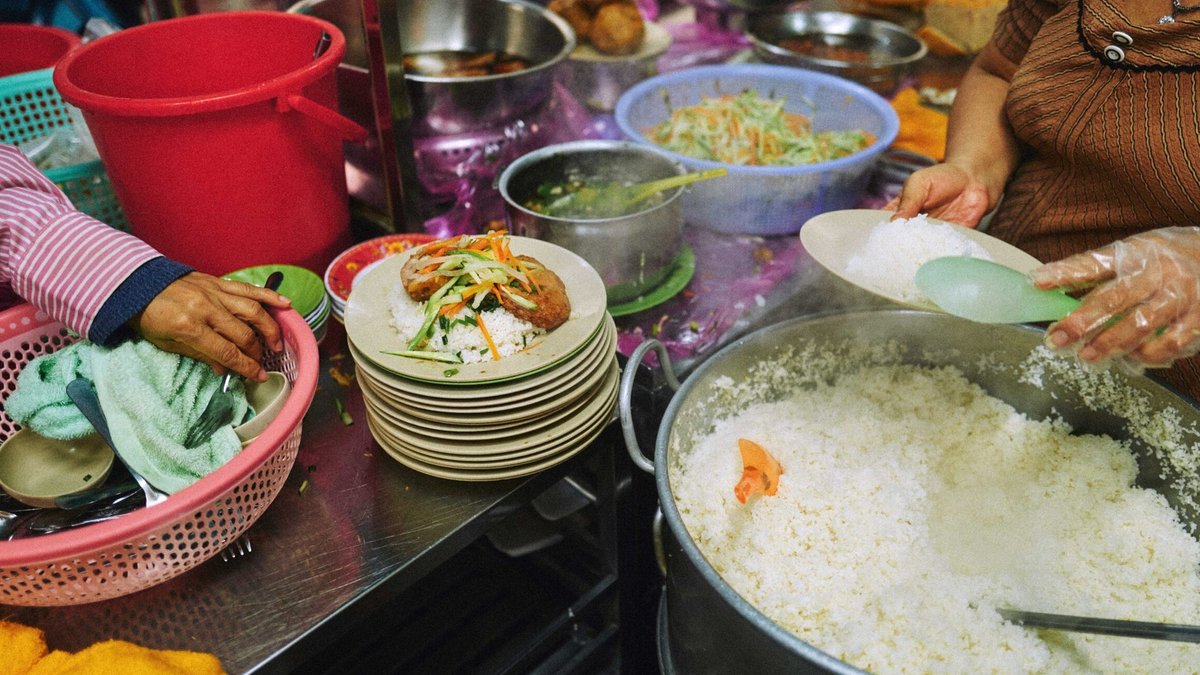
Primarily eaten for breakfast, cơm tấm is all about balance of flavors and textures. The rice is topped with sweet-savory charcoal-grilled pork, pickled carrot and daikon, scallion oil, and a drizzle of fish sauce seasoned with sugar and chiles. From there, the dish can be customized with preferred toppings like bì (shredded pork skin), chả (steamed egg-and-pork loaf), and a sunny-side-up egg. For the first episode of the series, the host, writer, and former SAVEUR editor Dan Q. Dao caught up with chef Lê Việt Hồng and his business partner, Mai Thanh Liêm, the team behind CieL Dining.
Read Also: Bogotá’s Best Coffee Shops Revealed
Since opening in early 2024, CieL has transformed Vietnam’s fine-dining environment, earning a Michelin star before its first birthday. Hồng blends Vietnamese ingredients and flavors with the techniques he developed while training abroad at spots including Noma in Copenhagen, Disfrutar in Barcelona, and SÉZANNE in Tokyo. This creates a distinctly modern expression of Vietnamese cuisine that remains deeply rooted in a local palate.
Despite his global résumé and high-concept tasting menus, the meal he most regularly returns to can be found at his local cơm tấm shop in Bình Thạnh, where his family has lived for decades. “I’ve been eating here since I was six years old,” he says. “It’s part of my childhood.” The episode follows Hồng as he revisits Cơm Tấm Dũng 43 to break down every component of a perfect plate.
Tracing the History of Vietnamese Coffee
Vietnam is one of the world’s great coffee cultures, and nowhere is that more apparent than in Saigon. From early morning until late at night, cafés function as gathering places, workspaces, and neighborhood institutions. You will find everything from the classic—intensely brewed robusta with condensed milk—to delicate pour-overs made with Vietnamese-grown arabica. This second episode, hosted by French Vietnamese creator Amandine Thùy-Trinh, explores four cafés that trace the evolution of the country’s coffee story.
Read Also: Oreo’s New Limited Flavors Boost Sales
The journey begins at Cà Phê Vợt, a family-run institution that has been brewing coffee through a cloth filter for more than 70 years. Owner Mrs. Tuyết, now the second generation of her family to run the shop, began helping her parents there as a child. She still uses the same charcoal-heated brewing method to produce the dark, aromatic “sock coffee” that keeps both young and old customers coming back. From there, Amandine visits Hue Cafe Roastery for two drinks closely associated with Vietnamese coffee culture: phin coffee and cà phê muối.
Slowly brewed through a small metal filter, Vietnamese coffee is traditionally intense and concentrated, while the addition of condensed milk brings sweetness and body. Salt coffee, which originated in the city of Huế, adds another dimension, using a lightly salty cream to balance the sweetness and bitterness of the drink. Next, at Cộng Cà Phê, one of Vietnam’s best-known homegrown coffee chains, the focus shifts to cà phê cốt dừa.
Strong Vietnamese coffee is paired with a frozen blend of coconut cream, condensed milk, and ice, creating a rich, refreshing drink that has become popular throughout the country and increasingly abroad. The final stop, Sipply Coffee, represents another, newer side of the country’s coffee story. Here, Vietnamese specialty arabica from high-altitude growing regions including Măng Đen, Sơn La, and Cầu Đất is roasted and brewed to highlight flavors that can be light, fruity, floral, and tea-like. This sharp contrast to the bold robusta profile many international drinkers associate with Vietnamese coffee shows how the local scene continues to expand.


